
USE CASE| TRANSPORT CORRIDORS
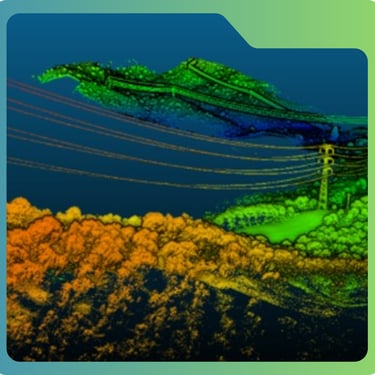
Highway Expansion Feasibility
Supporting route assessment, flood-risk visibility, and early design confidence with fixed-wing LiDAR.
Highway expansion projects require reliable terrain and corridor data to assess alignment options, understand drainage and flood-prone conditions, evaluate bridge and crossing sites, and support early-stage planning. BB Aerial Surveyors supports these projects with fixed-wing LiDAR and decision-ready spatial outputs that help transport teams optimise design alignment and reduce downstream construction risk before groundworks begin.
INDUSTRY
SERVICE APPLIED
Transport & Infrastructure
Route Selection & Feasibility
Supporting Corridor Mapping
DECISION MAKER
Transport planners
Civil engineers
Infrastructure developers
Consulting engineering firms
Public sector project teams
Feasibility and preliminary design teams
BEST FIT APPLICATIONS
Highway expansion feasibility studies
Route alternatives assessment
Arterial road upgrades
Transport corridor planning
Bridge and crossing-site planning
Drainage and flood-aware corridor screening
Early-stage infrastructure design support
The Challenge
Highway expansion projects often extend across long distances and variable terrain, requiring teams to understand topography, slopes, drainage patterns, existing infrastructure, access conditions, and surrounding land constraints before alignment decisions can be made with confidence.
When available survey data is patchy, outdated, or too limited in coverage, route evaluation becomes slower and less reliable. Teams can end up working around uncertainty instead of progressing feasibility with a clear spatial understanding of the corridor.
The challenge becomes more significant where a proposed upgrade must account for drainage lines, culverts, slopes, intersections, existing services, wetland areas, and development constraints. For long-distance highway expansion projects, teams also need clear visibility of flood-prone areas, bridge locations, crossing points, and terrain constraints early enough to support alignment decisions and reduce avoidable construction risk.
In these cases, project teams need more than isolated survey points. They need corridor-wide terrain intelligence that supports route assessment, flood-risk visibility, bridge-site review, and early engineering interpretation.
THE SOLUTIONS CAN COMBINE
Fixed-wing LiDAR acquisition for large corridor coverage
Orthophotos for visual context
Terrain modelling for slope and landform interpretation
Contour generation for preliminary planning inputs
Drainage and flood-risk context mapping
Bridge, crossing, and corridor constraint review
GIS-ready datasets for route, drainage, and environmental workflows
Engineering-ready mapping outputs for technical teams
Ground survey support where targeted validation or additional control is required
Better terrain visibility early in the process improves route comparison and creates a stronger base for later design, drainage review, bridge planning, and stakeholder decision-making


Project Teams get more consistent spacial base for:
route alternative comparison
terrain and slope assessment
drainage and flood-risk interpretation
bridge and crossing-site review
corridor constraint screening
preliminary engineering review






Why It Matters
BB Aerial Surveyors supports highway expansion feasibility with fixed-wing LiDAR and corridor mapping designed to give project teams a clearer understanding of the road environment over long distances. This approach is well suited to broad-area corridor assessment where consistent coverage, terrain clarity, and usable spatial outputs are needed early in the project lifecycle. BB Aerial Surveyors’ service capability includes corridor mapping, route selection and feasibility studies, engineering-grade surveys, GIS and 3D data integration, and professional ground surveying support.
For highway expansion work, this means giving engineering and planning teams a stronger spatial base to assess route options, identify flood-prone and low-lying areas, review likely bridge and crossing locations, and optimise alignment decisions before construction planning advances.
Our Solution
When feasibility data is incomplete or not structured for corridor evaluation, highway projects can face:
slower option assessment
weaker confidence in alignment decisions
uncertainty around terrain, drainage, and flood behaviour
weaker visibility of bridge and crossing-site constraints
more repeated site visits and field checks
avoidable redesign or construction risk later in the project
Deliverables
Results & Impact
Why BB Aerial Surveyors
classified LiDAR point cloud
high-resolution orthophotos
digital terrain model (DTM)
digital surface model (DSM)
contours
3D terrain data
route-option or corridor mapping
slope, drainage, and flood-risk context mapping
bridge and crossing-site support mapping
GIS-ready layers
engineering-ready spatial outputs
project-specific reporting packs
better understanding of terrain, drainage, and bridge-site constraints
stronger confidence in route and alignment assessment
improved visibility of flood-prone and sensitive corridor areas
more efficient feasibility and preliminary design workflows
reduced construction risk before groundworks begin
better coordination between transport, drainage, environmental, and engineering teams
BB Aerial Surveyors brings fixed-wing LiDAR capability, large-area coverage, and engineering-ready outputs to corridor-based transport projects.
Delivering practical, decision-ready spatial information that helps teams assess route options, understand terrain and flood-related conditions, evaluate bridge and crossing locations, and progress feasibility with greater confidence through:
expert delivery
comprehensive solutions
scale and speed
trusted industry support
Terrain information is used both to evaluate alternative routes and inform later design work, better spatial data at the start of a project can reduce uncertainty throughout the project lifecycle.
FAQs
What is transmission corridor mapping?
It is the capture and structuring of spatial data along a proposed or existing linear route to support planning, alignment, and design decisions.
Why is LiDAR useful for corridor mapping?
It helps capture detailed terrain and surface information efficiently over long distances.
When is fixed-wing LiDAR the right choice?
It is especially useful for long linear projects that need broad, consistent coverage.
Can LiDAR help identify river, wetland, and terrain constraints along a corridor?
Yes. LiDAR-derived terrain models and spatial datasets can help teams understand slope, landform, crossings, and environmentally sensitive areas earlier in the routeing process.
What deliverables are typically provided?
Point clouds, orthophotos, terrain models, contours, corridor datasets, and GIS-ready outputs.
Can corridor mapping support both route selection and later design stages?
Yes, but required outputs and detail may vary by project phase. Early routing and feasibility focus on corridor-wide constraints and terrain understanding, while later stages may require more detailed engineering or site-specific survey inputs.
Plan your corridor with better data from the start.
Speak to BB Aerial Surveyors about transmission corridor mapping for your next utility or infrastructure project.
Contact Us
info@bbaerialsurveyors.co.za
+27-82-852-4309
© 2026 BB Aerial Surveys (Pty) Ltd. All Rights Reserved | Website designed and developed by Creative Co-Pilot — Guiding brands from idea to launch, and beyond.
LiDAR You Can Build On
Serving South Africa & Pan-Africa
Build Smarter With LiDAR
Get expert LiDAR updates, case studies, and project insights straight to your inbox.